A recent article in Grist alerted me to the disturbing fact that about half of the chocolate eaten in the United States from from the Ivory Coast, where underage and forced child labor persists despite pressure on these big chocolate companies.
While there is no immediate solution to huge global issues like these, Equal Exchange and the human rights organization Global Exchange have teamed up in order to promote something called Reverse Trick-or-Treating in order to plant the seeds of change in American households.
Because a boycott could very well do more harm that good, these organizations are suggesting a different approach: Trick-or-Treat as usual but harness the power of public awareness by having our young trick-or-treaters exchange fair trade chocolates and informational fliers about the treatment of their peers worldwide. Read more in Claire Thompson's article and/or download the fliers here.
... is a place for the eco-curious to accompany one another as we sort through the latest green news, learn the history and future of food and agriculture, strive for sustainability, reflect on fun encounters in life and nature, and work to reduce not only our carbon footprints, but the footprints of our readers - one carefully considered step at a time.
Thursday, October 27, 2011
Wednesday, October 26, 2011
Countdown to New 'Food Rules'
In addition to illustrations by Maira Kalman, Michael Pollan has added nineteen new rules to the illustrated edition of Food Rules. For the next week leading up to the November 1st release, he will be counting down his favorite new rules and posting them here. Fingers crossed that yours truly's new rule, "If it seems too good to be true, it probably is," made the cut!
Pollan is also giving a lecture in nearby Bethesda, MD at 8:00pm tonight at the Strathmore Hall Foundation. Tickets and details here.
Wednesday, October 19, 2011
Food Facts for Food Day
With National Food Day coming up on Monday October 24th and World Food Day having just occurred, this seems like the right time to take a good hard look at the global food crisis and figure out what steps we can take towards a sustainable food system both individually and collectively. The misalignment of dates on the United States Food Day and the United Nations Food Day is a painful reminder of the disconnect that too many Americans still have regarding the impact of our everyday dining choices.
My suggestion: Spend some time with this educational infographic. Pat yourself on the back for the steps you have taken already. Consider stepping it up a notch where you can. Small-scale farms are popping up on rooftops and old parking lots near you - support them, learn from them, purchase produce from them and perhaps THAT model can be the one the rest of the world follows rather than those spread by corporate giants. Think globally, act locally.

Created by: Public Health Degree
My suggestion: Spend some time with this educational infographic. Pat yourself on the back for the steps you have taken already. Consider stepping it up a notch where you can. Small-scale farms are popping up on rooftops and old parking lots near you - support them, learn from them, purchase produce from them and perhaps THAT model can be the one the rest of the world follows rather than those spread by corporate giants. Think globally, act locally.
Created by: Public Health Degree
Friday, October 14, 2011
University of Maryland, College Park
The community gardens on the University of Maryland, College Park campus are hosting an event on Food Day, Monday October 24th, that includes tours of the edible gardens popping up on rooftops and hillsides throughout the campus and great discussions about future initiatives for sustainable agricultural systems in our region. Stay tuned to the Public Health Garden Blog for more details. Hope you can make it!
Monday, October 10, 2011
'The Lexicon of Sustainability'
The Lexicon of Sustainability is the most beautiful website I have ever viewed and no words of mine will do it justice. Just go there. Explore it. Learn. Breathe easy knowing that when a movement has a language so evolved, inspired and rich with research and purpose, the momentum of our conversations will carry us forwards and backwards towards a sustainable food system just fine.
Monday, October 3, 2011
Flower-Based Ice Cream
Derived from lupine seeds, Lupinesse is a cholesterol-free, non-dairy, flower-based ice cream that is good for you and good for our soil.
The ice cream, created and released by the Fraunhofer Labs in Germany, contains no dairy, gluten, or animal fats. The high-protein seed from which it is derived not only helps to create a creamy consistency, but also has cholesterol-regulating effects. And just in case that isn't enough to get you to put in a request at your local grocer, the plant itself - known in Europe as the "soybean of the north" - has nitrogen-binding roots so growing it can improve soil quality!
Monday, September 19, 2011
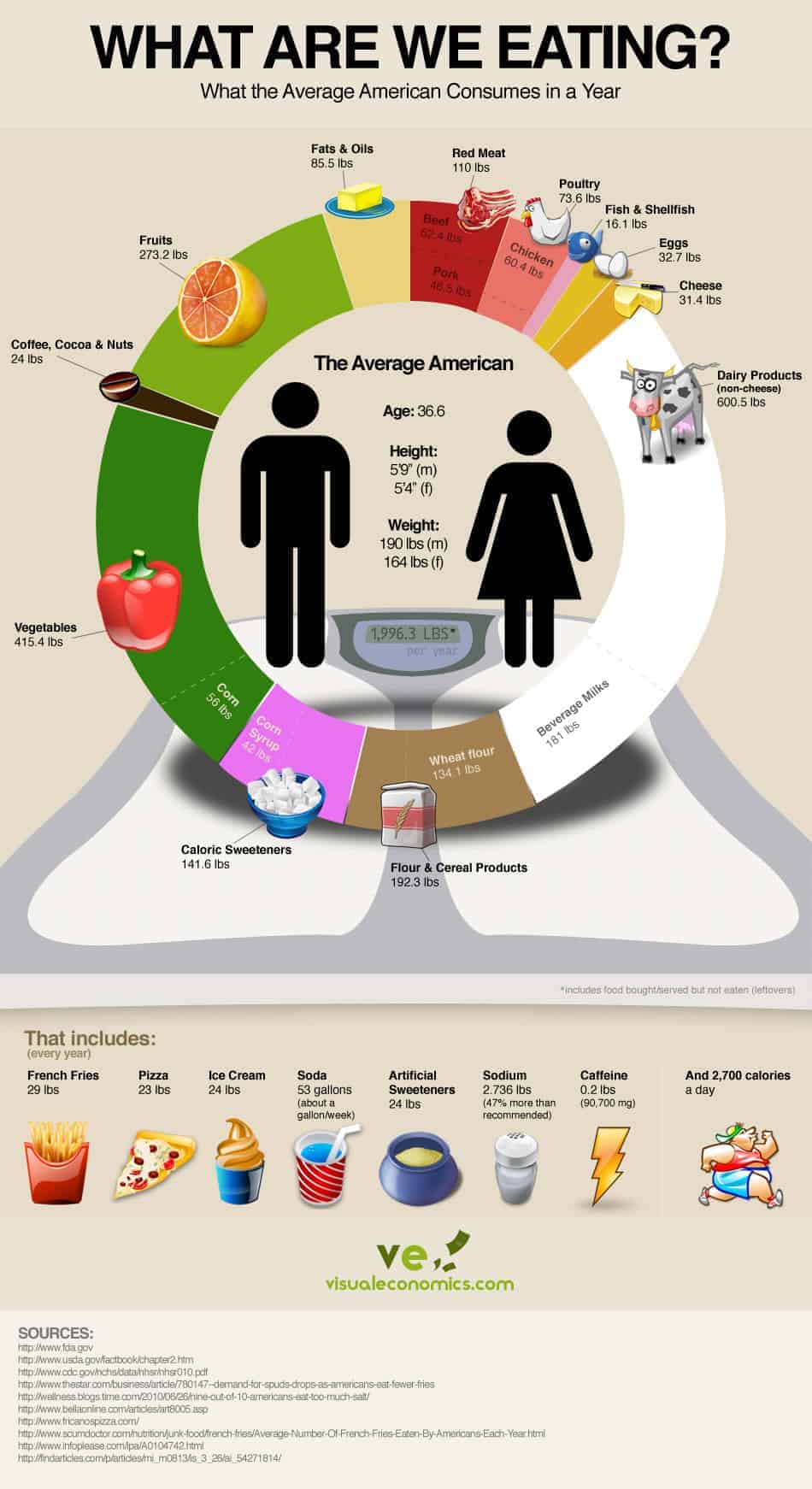
2,700 calories/day : 1,996 lbs/year
According to an infographic posted on The Atlantic and compiled by Sarah Kliff (with data from the FDA, USDA, CDC, etc), the average American consumes 1,996.3 lbs of food (and food-like substances) a year. A small note on the graphic (full size here) points out that the numbers crunched include "food bought/served but not eaten (leftovers)," which briefly alleviates the shame felt learning that the average American consumes 29 lbs of french fries and 23 lbs of pizza per year... until you remember that you've never let those last few fries go to waste. Ugh.
Tuesday, September 13, 2011
Cutie-Pants Critter on Campus
Met this adorable little guy last week and bumped into him again today (while armed with a camera). Not sure if he was born without a tail or lost it in a Fantastic Mr Fox-style shootout with Boggis, Bunce and Bean. Either way, I admire his spirit and intend to woo him with a variety of nuts throughout the semester.
Tuesday, August 30, 2011
Invasivore > Vegetarian
It's no secret that becoming a vegetarian is one of the best things you can do for the environment. Take it a step further and aim to eat local, in-season produce and you may just get a personal thank you note from Mother Earth. Take it several steps further and you may find yourself stepping outside the vegetarian menu and into a growing culinary trend: eating invasive species.
Thanks to some courageous Baltimore chefs, the option to eat invasive may be coming to a restaurant near you.
Last week, I sat down with 49 other adventurous and environmentally conscious eaters who entered their names into a raffle in hopes to win a seat at Alewife Baltimore's Snakehead Fish dinner. The dinner consisted of four courses centered around the invasive snakehead fish. Chef Joe Edwardsen of Joe Squared, Chef Dave Newman of Brewer's Art, Alewife Executive Chef Chad Wells, and Alewife's Grace Gonzalez each contributed a dish. As you look at their delicious, inspired twists on the fish, consider the fact that consuming these critters helps protect native aquatic life.
As always, the saying goes: Everything in moderation - including moderation. Few human beings can completely restrict their diets to local produce and invasive species alone. Life gets busy, the joy of cooking relegated to holidays and Sundays, we have children with nutritional needs paramount to our ideals, and the organic market closes before you can say, "Is it September already?!" So think of it like this: When given the opportunity to do the best possible thing for the environment, seize the snakehead!
Thanks to some courageous Baltimore chefs, the option to eat invasive may be coming to a restaurant near you.
Last week, I sat down with 49 other adventurous and environmentally conscious eaters who entered their names into a raffle in hopes to win a seat at Alewife Baltimore's Snakehead Fish dinner. The dinner consisted of four courses centered around the invasive snakehead fish. Chef Joe Edwardsen of Joe Squared, Chef Dave Newman of Brewer's Art, Alewife Executive Chef Chad Wells, and Alewife's Grace Gonzalez each contributed a dish. As you look at their delicious, inspired twists on the fish, consider the fact that consuming these critters helps protect native aquatic life.
| Chef Joe Edwardsen's Smoked Snakehead Risotto with Arugula |
| Chef Dave Newman's Tempura Snakehead and Green Papaya Salad with Peanuts, Spicy Ginger Aioli and Yuzu Scallion Vinaigrette |
![]() |
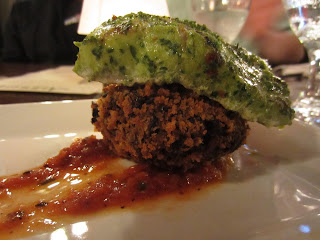
| Chef Chad Wells' Grilled Snakehead, Chimichurri, Blistered Tomato Chipotle Mecco Salsa with Black Bean Croquette, Micro Salad, Orange Cumin Vinaigrette |
![]() |
| Grace Gonzalez' Coconut Mousse with Caramel Ginger Sauce, Tropical Fruit Salsa and Candied Snakehead Skin |
As always, the saying goes: Everything in moderation - including moderation. Few human beings can completely restrict their diets to local produce and invasive species alone. Life gets busy, the joy of cooking relegated to holidays and Sundays, we have children with nutritional needs paramount to our ideals, and the organic market closes before you can say, "Is it September already?!" So think of it like this: When given the opportunity to do the best possible thing for the environment, seize the snakehead!
Subscribe to:
Posts (Atom)