Showing posts with label food. Show all posts

Monday, April 30, 2012

The Secret Life of Peas


Check it out! The common pea is capable of processing, remembering and sharing information with its neighbors. Michael Marder, for the New York Times Opinionater, reports:

"...a team of scientists from the Blaustein Institute for Desert Research at Ben-Gurion University in Israel published the results of its peer-reviewed research, revealing that a pea plant subjected to drought conditions communicated its stress to other such plants, with which it shared its soil. In other words, through the roots, it relayed to its neighbors the biochemical message about the onset of drought, prompting them to react as though they, too, were in a similar predicament."

Any scientists/geneticists out there know if these findings have anything to do with how or why Mendel was able to study and and demonstrate inheritance through peas? Were those peas co-evolving with us and telling each other that being relevant in modern scientific experiments would foster future generations of intelligent peas that could one day outsmart their human predators? Nah... probably not... but it certainly doesn't surprise me that they grow and work together. 

Read Marder's full article "If Peas Can Talk, Should We Eat Them?" examining the ethics of eating such intelligent life forms here. 

Monday, April 16, 2012

Chesapeake Bay Week on MPT

Did you know that the Chesapeake Bay estuary, the largest in the United States, was created by a meteor impact? Can you identify which aquatic life is native, invasive, protected and depleted? Want to know how you and your community contribute to the well-being of the Bay? Lucky for you, this week is Chesapeake Bay Week on Maryland Public Television! Programming throughout April 15-22 2012 will be highlighting some hot topics around the watershed  including several brand new programs:

  • Menhaden: The Most Important Fish in the Bay - Exploration of how the harvesting of Menhaden from the Chesapeake Bay is affecting its water quality (Monday April 16th 10:00pm, Tuesday April 17th 2:00am)
  • The Maryland Harvest: A Guide to Seasonal Eating - The food-to-table movement in Maryland and its impact on Maryland restaurants, chefs, farmers and consumers (Tuesday April 19th 9:00pm, Wednesday April 18th 2:00am)
  • Restoring the Bay: New Solutions for Old Problems - Riverkeeper Fred Kelley faces challenges to help clean up the Severn River (Tuesday April 19th 10:30pm, Wednesday April 18th 3:30am)

These are just a few of the new and returning programs so be sure and check the website for the full programming lineup and set those DVRs! The week wraps up with a live music broadcast in affiliation with all the amazing folks at WTMD 89.7 too. More info on the Concert for the Chesapeake Bay here. Want more facts? Visit: Chesapeake Bay Journal..

Saturday, January 21, 2012

Food = Art


I've been a fan of Baltimore's own Chef Chad Wells, Executive Chef at Alewife, since I heard he was sauteing snakeheads in an attempt to eradicate the invasive fish and working with the Department of Natural Resources to promote menu items centered around local seafood species. Turns out his sustainable initiatives aren't limited to the sea.

Earlier this month, Chef Wells teamed up with Joe Squared at Power Plant Live to host a "Campfire Dinner" in conjunction with the new monthly event promoting local talent called Food = Art. The inspiration for January's event was to take people camping by using food you can kill yourself - all cooked in a way that can be duplicated deep in the woods - with limited local ingredients, cast iron pans, smoke and fire. And boy did they pull it off!

The constant-campfire vibe of the event, which included an all-evening performance of folky, old-timey, American awesomeness from The Manly Deeds, was authenticated with each family-style entree arriving in foil and with a single utensil per diner - a fork. If that weren't enough, several people at our table were involved with the meal on a personal level. Mike Naylor, the DNR's Chief of Shellfish Programs, foraged the morels that accompanied the trout dish. Austin Murphy, Pro-Staffer for Whackfactor Outdoors, "harvested" the main ingredient in the venison stew in Flint Hill, Virginia.


So in case you haven't heard: wild game dinners are the new black. Here is the full menu for those of you anxious to recreate the deliciousness with your own circle of hunter-gatherers:

Hot Mulled Cider, Honey Comb Infused Bourbon

Hickory Smoked Trout, Pan Fried Wild Morels, Roasted Beets

Wild Duck Cast Iron Mac and Cheese, Two-year aged Grafton Cheddar, Grana Padano, Duck Confit

Fire Roasted Quail, Sweet Potato, Chorizo and Granny Smith Apple Stuffing, Smoked Pork Belly BBQ Baked Beans

Venison Stew, Dutch Oven Chipotle Corn Bread

Smore Dessert, Graham Cracker, Dark Chocolate, Marshmallow, Candied Bacon


To keep up with Food = Art events, 'like' them on Facebook. Most photos displayed in this post, with the exception of a few, are from the artistic view of Sean Scheidt See more of his images from the event here.

Wednesday, October 19, 2011

Food Facts for Food Day

With National Food Day coming up on Monday October 24th and World Food Day having just occurred, this seems like the right time to take a good hard look at the global food crisis and figure out what steps we can take towards a sustainable food system both individually and collectively. The misalignment of dates on the United States Food Day and the United Nations Food Day is a painful reminder of the disconnect that too many Americans still have regarding the impact of our everyday dining choices.

My suggestion: Spend some time with this educational infographic. Pat yourself on the back for the steps you have taken already. Consider stepping it up a notch where you can. Small-scale farms are popping up on rooftops and old parking lots near you - support them, learn from them, purchase produce from them and perhaps THAT model can be the one the rest of the world follows rather than those spread by corporate giants. Think globally, act locally.


The Food Crisis
Created by: Public Health Degree

Friday, October 14, 2011

University of Maryland, College Park


The community gardens on the University of Maryland, College Park campus are hosting an event on Food Day, Monday October 24th, that includes tours of the edible gardens popping up on rooftops and hillsides throughout the campus and great discussions about future initiatives for sustainable agricultural systems in our region. Stay tuned to the Public Health Garden Blog for more details. Hope you can make it!

Monday, October 10, 2011

'The Lexicon of Sustainability'


The Lexicon of Sustainability is the most beautiful website I have ever viewed and no words of mine will do it justice. Just go there. Explore it. Learn. Breathe easy knowing that when a movement has a language so evolved, inspired and rich with research and purpose, the momentum of our conversations will carry us forwards and backwards towards a sustainable food system just fine.

Monday, September 19, 2011

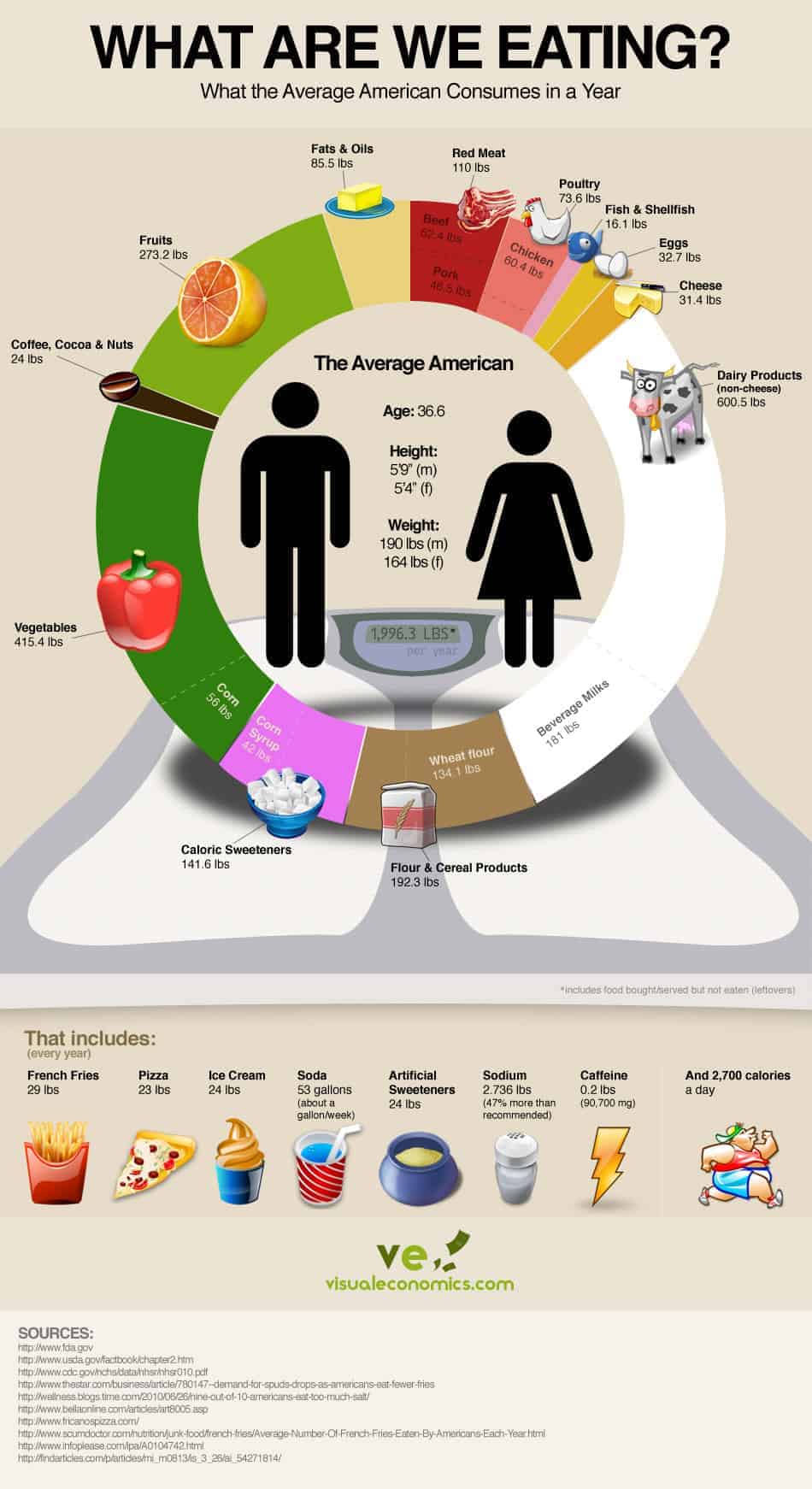
2,700 calories/day : 1,996 lbs/year


According to an infographic posted on The Atlantic and compiled by Sarah Kliff (with data from the FDA, USDA, CDC, etc), the average American consumes 1,996.3 lbs of food (and food-like substances) a year. A small note on the graphic (full size here) points out that the numbers crunched include "food bought/served but not eaten (leftovers)," which briefly alleviates the shame felt learning that the average American consumes 29 lbs of french fries and 23 lbs of pizza per year... until you remember that you've never let those last few fries go to waste. Ugh. 

Sunday, August 21, 2011

Eating Invasives

Earlier this year, I was invited to dine on a Canada goose and Maryland deer (pictured right) hunted, prepared and cooked by my hosts and long-time friends: Heather and Michael Havlik. Although the menu wasn't suited for a traditional vegetarian (which I am often mistaken for), it was ideal for an exercise in local, sustainable eating. Not to mention, the meat was so tender and full of flavor I nearly forgot I was eating animals.

Throughout our often holiday-therefore-dinner-party-centered relationship, the subject of what we eat, don't eat and why has often been debated. Michael Havlik, like most hunters, fishermen and outdoors men, is a conservationist at heart. His wife Heather will stalk over-populated deer and shuck local oysters with the best of 'em. Years ago, they opened my eyes to the dangers of non-native birds and helped shape my current respect and admiration for hunters - particularly those who set their sites on species that threaten the local eco-system. This year, they ignited my curiosity and taste for another level of eco-eating: dining on invasive species.

While the adorable waddle of Canada geese and smile-inducing relationships between mother and fawn prevent me from going forest-to-table alongside the Havliks, the newest "invasivore" movement in town, aimed at eradicating the snakehead fish, is one almost all of us can endorse without remorse.


Alewife Executive Chef and sustainable seafood steward, Chad Wells (pictured), has made it his mission to get these creatures out of the waterways and into the kitchens of environmentally conscious restaurants locally and nationwide. He recently told The Baltimore Sun, "We've proved time and again, the best way to destroy something is get humans involved."

The aggressive and predatory snakehead fish, well-known for their canine-like teeth, are thought to have entered U.S. waterways via aquarium owners and the live fish food market. The fish reproduce rapidly and, during all of their life stages, compete with native species for food. If left to their own devices, the snakeheads could drastically effect biodiversity and forever disrupt the ecological balance of native aquatic systems.

This Tuesday, August 23, 2011, Chef Chad Wells is teaming up with fellow chefs and conservationists Dave Newman of Brewer's Art, Joe Edwardsen of Joe Squared, and Brian Strumke of Stillwater Artisinal Ales for an official snakehead dinner kicked off by a talk from Steve Vilnit of the Maryland Department of Natural Resources fisheries service.

I have the honor of an invitation to the dinner and am as excited about Steve Vilnit's talk as I am about being a part of  snakehead eradication. There has been some debate in the scientific community as to how and why we, as human beings, get to designate plant and animal species as invasive. In an article published in the Boston Globe in July, The Invasive Species War, Leon Neyfakh highlighted various movements and opinions both popular and scientific. After reading the article, Brian Knox, President of Sustainable Resource Management, Inc and co-snakehead-diner this coming Tuesday, pointed out the importance of distinguishing between non-native species and invasives.

"We have loads of non-native plants everywhere," Knox explained. "Any plant can become a problem if it spreads aggressively and pushes out diverse native vegetation replacing it with a monoculture desert. It is important to remember that ecosystems are dynamic and will change naturally over time (succession) but many invasives (mile-a-minute, kudzu, autumn olive, bittersweet, etc) spread at a speed only matched by developers on bulldozers."

Luckily, there isn't much debate about the environmental dangers of snakeheads however Chef Chad Wells doesn't intend to stop his crusade at the river bank. He is currently experimenting with invasive plants like Kudzu for an upcoming event with Baltimore's Food = Art.

Proof of a growing interest in invasive eating graces the pages of the September-October issue of Mental Floss magazine in The Joy of Cooking Invasive Speicies: Recipes for American Cannonball Jellyfish, Nutria, Kudzu, Lionfish and Canada Geese. Snakehead fish, and an accompanying recipe for it, is noticeably absent from the Mental Floss feature but Wells' new recipe is due to publish in an upcoming issue of Maryland Natural Resource Magazine and will most certainly be raved about on this blog after Tuesday's tasting.

For more information about invasive species in Maryland, check out the DNR's Invasive Speices Resource Center. For further reading on our relationships with and interest (or lack-thereof) in eating animals, I recommend Hal Herzog's Some We Love, Some We Hate, Some We Eat and Jonathan Safran Foer's Eating Animals.

Tuesday, July 19, 2011

Best and Worst Protein Sources

Last month, the USDA debuted their revised food pyramid in a new form: a food plate. Aside from the shape, one of the most notable differences was that a portion called "protein" replaced the meat portion.

Anyone who avoids (factory farmed) meat has likely spent a fair amount of time researching alternative protein sources and their environmental impact respectively. Lucky for us, the Environmental Working Group has put together a list (and handy pocket guide) of the best and worst protein sources. Here they are:

Five Worst Protein Choices for the Environment:
1.) Lamb
2.) Beef
3.) Cheese

4.) Pork
5.) Farmed Salmon

The carbon footprint from lamb and beef cattle comes mostly from the methane produced through digestion, manure, the crops grown to feed them and the shipping during different stages of production. With pigs, the biggest environmental impact is in their poop and processing. The electricity, feed supplement and air shipping for farmed salmon landed it on the list. Cheese landed on the list due to 'bang for your buck.' Too much environmental impact for too little of a serving for the protein benefit.

Five Best  Protein Sources for the Environment:
1.) Milk
2.) Beans
3.) Tofu
4.) Eggs
5.) Chicken

The good protein choices are a bit more complicated. Tofu still has a big footprint because of the carbon footprint from growing soy beans and processing it into tofu, but it is one-third that of beef. Eggs are still carrying the environmental impact of poultry farms but they offer a lot of protein per serving. Milk, if it is local, is great and beans (and lentils too) are a pretty guilt-free protein source. As far as chicken is concerned, let's just say it is better than beef.  

Find more detailed lists and explanations here and here. And as always, the Environmental Working Group website is an incredible resource for this kind of stuff.

Sunday, June 12, 2011

Lecture Series: The Benefits of Eating Green


I will speaking at this lecture series on behalf of Allison Lilly and The University of Maryland Public Health Garden. Representatives from Grow Annapolis, Local Food Beat and attendees will discuss how the local food and sustainable agriculture movement is impacting out health, community, economy and ecosystems. My lecture will highlight the University of Maryland's participation in the movement.

The Benefits of Eating Green
The 7th Installment of Quiet Waters Park Environmental Lecture Series
Thursday, June 16th, 2011 @6:30pm
Blue Heron Center, Quiet Waters Park, Annapolis, MD


Speakers include: Joel Bunker of Grow Annapolis, Sharon New of Local Food Beat and Allison Lilly/Deborah Dramby from the University of Maryland Public Health Garden. Admission is free thanks to event sponsors: Friends of Quiet Waters Park. For more information, visit the event website or contact Natalie Nucifora at rpnuci22@aacounty.org

Wednesday, June 8, 2011

"Plenty More Fish in the Sea?"


Just came across this disturbing infographic (on grist.org but from Information is Beautiful) revealing the declining biomass of popularly eaten fish. Popularly eaten fish measured include: bluefin tuna, cod, haddock, hake, halibut, herring, mackerel, pollock, salmon, sea trout, striped bass, sturgeon, turbot. Many of which are now vulnerable or endangered. Note that the graphic only measures to the year 2000 so... yikes.

Click on the image to enlarge and here to learn more about the data collection and study.

Sunday, June 5, 2011

The New Food Plate


The USDA's answer to the "complicated" Food Pyramid: a simple plate, place mat, drink and fork. Here's what people are saying:

"This is a quick, simple reminder for all of us to be more mindful of the foods that we’re eating. We’re all bombarded with so many dietary messages that it’s hard to find time to sort through all this information, but we do have time to take a look at our kids’ plates. If the filled plate looks like the symbol, with lots of fruits and vegetables, it’s as simple as that." - Michelle Obama

"It’s better than the pyramid, but that’s not saying a lot." - Marion Nestle

"It's such a recognizable image. Everybody has seen a plate, used a plate. It's much easier to visualize when it's something we use on a daily basis. It's about choosing the right things, not so much about avoiding." - Toby Smithson, R.D., a national spokesperson for the American Dietetic Association

"The new 'food icon' was designed to help slim Americans’ expanding girths: Two-thirds of American adults and one-third of children are overweight or obese. The costs associated with obesity are enormous.” - Tom Vilsack, Agriculture Secretary

“It’s brilliant in its simplicity. It’s something the average American can look at and get a visual feel for how they can fill up a plate at a meal.” - Robb MacKie, Head of the American Bakers Association

"The plate image does not suggest portion sizes, only the ratios in which foods should be eaten." - Various Nutritionists

We here at Just Saying are curious to see how the meat industry will react to being relegated to the purple protein portion of the plate - that does not appear to require a knife or spoon. As always, reader thoughts and comments are welcome.

***UPDATE***

Stephen Colbert weighs in: "A plate? For Food? What's the connection? Americans don't use plates anymore. Our food comes from cases, bags, cans, tubes, and envelopes made of themselves." Watch the entire Colbert clip here.

Monday, May 30, 2011

Pyramid to Plate

For decades, U.S. school teachers have explained proper nutrition by way of the handy dandy food pyramid we all know and most of us have come to ignore. A diet built on grains is fit for a farmer, but for an unfortunate majority of Americans the definition of grains has been obfuscated by french fries and pizza and adding cheese to anything suffices as a dairy serving. Many popular diet programs seemed to be turning the pyramid upside-down and sideways and altering the agreed-upon definition of a healthy diet to suit their marketing so in 2005, the U.S.D.A released a new and improved pyramid emphasizing exercise as an important component - but it was widely regarded as confusing.

Last summer, the brainstorm for a new logo began. In January the government released new dietary guidelines and now, about $2 million bucks later, they are gearing up to release the new and improved pyramid, now in circular form and branded as the Food Plate.

From what I understand, the pie chart plate image will be released sometime next week. My guess is that it will be nothing short of obvious but perhaps the redesign will stick in our minds when we look down at our dinner plates.

Friday, May 20, 2011

Prison Food vs School Lunch

This image was created in collaboration between GOOD and Column Five Media.
Click on the image above (or here) to see the larger, more detailed infographic showing the striking similarities between meals served in prisons and meals served in schools. The difference: The federal budget for school food programs averages about $11 billion per year whereas the prison food is budgeted at $205 million per year. Yikes.

Thursday, May 12, 2011

Reminder: Part II of Accokeek's Food Justice Series is Tonight

@Busboys and Poets 14th and V Location. Part two of the series of open-to-all events will feature Denzell Mitchel of Five Seeds Farm, Michele Levy of Crossroads Farmers Market, and Don Bustos from Santa Cruz Farm! Come out and support the Accokeek Foundation, the National Immigrant Farming Initiative, and the Rural Coalition. Speakers and guests will spotlight the issues that affect food justice on a local and global scale. Here's a little more about the series from Community Outreach and Education Coordinator at Accokeek, Molly Meehan:

"In recognizing the intersection between sustainable agriculture and a fair and just food system, we have invited farmers, policymakers, community leaders, and advocates to address such topics as agricultural policy, food sovereignty, building local and just food systems, achieving food access, and the connection between the environment, our health, and our food. With this series, we hope to cultivate insight and conversation among diverse members of the community, demonstrate opportunities for action with locally based initiatives, strengthen our solidarity, and develop an awareness of the pressing need to restore justice to our food and our land."

Wednesday, May 4, 2011

Onions + Cake


I knew this day would come. A fatty-food concoction - as appetizing to me as the KFC Double Down is to my meatatarian contemporaries - has surfaced on the Internet. Red Velvet Battered Onion Rings. Maybe I can convince my girl over at Adventures in Container Gardening to try out this recipe if we grow the onion?

Thursday, March 31, 2011

Global Food Spending


In my experience, when the topic of so-called "health food" (which we used to just call food) arises, one of the most common objections relates to price. People say, "But it is soooo much more expensive!" Compared to a 99 cent cheeseburger at a drive through, I suppose paying a few extra cents for a locally grown strawberry and without much knowledge of the externalized costs of that cheeseburger could be a turn off. So I like to re-frame spending and remind folks of what the graph above points out: It only seems expensive because we have had the option and become accustomed to spending a very small percentage of our incomes on food. How many televisions (aka non-essential items) do you have in your house and how much do you spend a month on cable? The tiny additional cost of that local strawberry seems much more reasonable, right? Not to mention you are supporting local and reducing your own footprint.

The global food map, available with interactive features and a great accompanying article on the Civil Eats website, was designed by Natalie Jones, a graduate student at UC Berkeley. It reveals that we Americans spend less of our income on food than any other country that keeps such data. Wowzers.

Tuesday, March 29, 2011

"Sí, se puede"

Thursday, March 31st, is César Chávez Day. The Mexican-American farm worker, labor leader, civil rights activist and co-founder of the National Farm Workers Association (now United Farm Workers) is celebrated for his devotion to the farm workers' movement and unique approach to unionism that made the farm workers' struggle a moral cause with nationwide support.

In nearby Washington, D.C., our friends at the Accokeek Foundation Center for Agricultural and Environmental Stewardship, in partnership with the Rural Coalition and National Immigrant Farming Initiative, are celebrating Chávez by kicking off their four-part lecture series exploring issues that affect food justice on a local and global scale. Tirso Moreno, leader of the Farmworker Association of Florida, and Board Member of the National Immigrant Farming Initiative and Rural Coalition will share the experience of farmworkers today. Delegates from the Rural Coalition and National Latino Farmers and Ranchers Trade Association will report on Via Campesina’s Global Forum for Life, Environment, and Social Justice in Cancun and Kathy Ozer from the National Family Farm Coalition will discuss food sovereignty and grassroots policy advocacy.

If you are interested in local and just food systems, bettering food access, and the connection between the environment, our health, and our food, this is the perfect place to mingle with like-minded folks and learn more about what's happening in the movement. The event is free and open to all however donations are welcome. The event takes place from 6:00 - 8:00pm in thge Langley Room at Busboys and Poets, 2021 14th St. NW, Washington, D.C., 20009. Find more information here.

Saturday, March 26, 2011

Coming Soon

Hey there, Just Sayers. Apologies for the gap between posts. We've been off the grid for a week gathering information and ideas for an exciting spring season on the blog. Check back soon for the following fun topics:

Wednesday, March 16, 2011

The Importance of Being Reasonable


I often run into the same conversation when out to dinner with friends or family. It goes something like this:

Me: There's no meat in this, right?
Waiter: Nope, no meat. Are you a vegetarian?
Family/Friend Elect: I've seen you eat sushi, Deb. That's not sustainable. Why not just get the salmon? You need your protein.
Sister: I have a picture of you eating Mom Carter's fried chicken! Diet Coke and a turkey sandwich!
Me: Zip it, sister. I never claimed to be vegetarian. I only try to eat consciously and (making quote signs in the air) 'vote with my fork.' I also try to be polite when I am a guest in someone's home. Have you ever seen me purchase or order a meat dish? No. The environmental, health and anthrozoological consequences of mass-produced factory farmed meat appall me. But then again, so do the uber-rigid vegans who look upon the sneetches without stars... (waiter tries to excuse him/herself from the conversation)
Family/Friend Elect: You can't be half a vegetarian. What are you? Is there even a word for it? Why don't you just become Amish?
Me: Because I love the Internet too much.

While I certainly wish there were a simple word - like flexitarian - assigned to my beliefs and decisions around the dining table, I'm somewhat grateful there isn't because sometimes the strongest beliefs evolve over time along with exposure to knowledge and experiences. What I am trying to say is much better said in the fantastic article up on Treehugger that prompted this post to begin with.

The article, by Sami Grover's, emphasizes the importance of being sincere in your beliefs without shutting out new ideas and that "self reflection is not a lack of conviction." There is a wide spectrum of environmentalists out there and it is important that we remain reasonable and do not become too rigid. Progress, not perfection.