Showing posts with label baltimore. Show all posts

Monday, April 16, 2012

Chesapeake Bay Week on MPT

Did you know that the Chesapeake Bay estuary, the largest in the United States, was created by a meteor impact? Can you identify which aquatic life is native, invasive, protected and depleted? Want to know how you and your community contribute to the well-being of the Bay? Lucky for you, this week is Chesapeake Bay Week on Maryland Public Television! Programming throughout April 15-22 2012 will be highlighting some hot topics around the watershed  including several brand new programs:

  • Menhaden: The Most Important Fish in the Bay - Exploration of how the harvesting of Menhaden from the Chesapeake Bay is affecting its water quality (Monday April 16th 10:00pm, Tuesday April 17th 2:00am)
  • The Maryland Harvest: A Guide to Seasonal Eating - The food-to-table movement in Maryland and its impact on Maryland restaurants, chefs, farmers and consumers (Tuesday April 19th 9:00pm, Wednesday April 18th 2:00am)
  • Restoring the Bay: New Solutions for Old Problems - Riverkeeper Fred Kelley faces challenges to help clean up the Severn River (Tuesday April 19th 10:30pm, Wednesday April 18th 3:30am)

These are just a few of the new and returning programs so be sure and check the website for the full programming lineup and set those DVRs! The week wraps up with a live music broadcast in affiliation with all the amazing folks at WTMD 89.7 too. More info on the Concert for the Chesapeake Bay here. Want more facts? Visit: Chesapeake Bay Journal..

Friday, January 20, 2012

State of Our Earth: Eco Conference @ American Visionary Art Museum


In conjunction with the current exhibit ALL THINGS ROUND: Galaxies, Eyeballs & Karma, the American Visionary Arts Museum in Baltimore is hosting an all-day, FREE Eco Conference this Sunday, January 22nd starting at 10:00am. Speakers include:

  • Ecologist, author of Living Downstream, and cancer survivor Sandra Steingraber
  • Marine toxicologist, Dr. Susan B. Shaw
  • Epidemiologist, Shira Kramer 
  • CEO of the National Aquarium, John C. Racanelli
  • Award-winning photo-journalist, Antrim Caskey
  • Founder & Director of the U.S. Climate and Emergency Council, Mike Tidwell 

There will be a 7:00pm screening of "What on Earth?" as well. Check out the conference details and schedule here.

Sunday, August 21, 2011

Eating Invasives

Earlier this year, I was invited to dine on a Canada goose and Maryland deer (pictured right) hunted, prepared and cooked by my hosts and long-time friends: Heather and Michael Havlik. Although the menu wasn't suited for a traditional vegetarian (which I am often mistaken for), it was ideal for an exercise in local, sustainable eating. Not to mention, the meat was so tender and full of flavor I nearly forgot I was eating animals.

Throughout our often holiday-therefore-dinner-party-centered relationship, the subject of what we eat, don't eat and why has often been debated. Michael Havlik, like most hunters, fishermen and outdoors men, is a conservationist at heart. His wife Heather will stalk over-populated deer and shuck local oysters with the best of 'em. Years ago, they opened my eyes to the dangers of non-native birds and helped shape my current respect and admiration for hunters - particularly those who set their sites on species that threaten the local eco-system. This year, they ignited my curiosity and taste for another level of eco-eating: dining on invasive species.

While the adorable waddle of Canada geese and smile-inducing relationships between mother and fawn prevent me from going forest-to-table alongside the Havliks, the newest "invasivore" movement in town, aimed at eradicating the snakehead fish, is one almost all of us can endorse without remorse.


Alewife Executive Chef and sustainable seafood steward, Chad Wells (pictured), has made it his mission to get these creatures out of the waterways and into the kitchens of environmentally conscious restaurants locally and nationwide. He recently told The Baltimore Sun, "We've proved time and again, the best way to destroy something is get humans involved."

The aggressive and predatory snakehead fish, well-known for their canine-like teeth, are thought to have entered U.S. waterways via aquarium owners and the live fish food market. The fish reproduce rapidly and, during all of their life stages, compete with native species for food. If left to their own devices, the snakeheads could drastically effect biodiversity and forever disrupt the ecological balance of native aquatic systems.

This Tuesday, August 23, 2011, Chef Chad Wells is teaming up with fellow chefs and conservationists Dave Newman of Brewer's Art, Joe Edwardsen of Joe Squared, and Brian Strumke of Stillwater Artisinal Ales for an official snakehead dinner kicked off by a talk from Steve Vilnit of the Maryland Department of Natural Resources fisheries service.

I have the honor of an invitation to the dinner and am as excited about Steve Vilnit's talk as I am about being a part of  snakehead eradication. There has been some debate in the scientific community as to how and why we, as human beings, get to designate plant and animal species as invasive. In an article published in the Boston Globe in July, The Invasive Species War, Leon Neyfakh highlighted various movements and opinions both popular and scientific. After reading the article, Brian Knox, President of Sustainable Resource Management, Inc and co-snakehead-diner this coming Tuesday, pointed out the importance of distinguishing between non-native species and invasives.

"We have loads of non-native plants everywhere," Knox explained. "Any plant can become a problem if it spreads aggressively and pushes out diverse native vegetation replacing it with a monoculture desert. It is important to remember that ecosystems are dynamic and will change naturally over time (succession) but many invasives (mile-a-minute, kudzu, autumn olive, bittersweet, etc) spread at a speed only matched by developers on bulldozers."

Luckily, there isn't much debate about the environmental dangers of snakeheads however Chef Chad Wells doesn't intend to stop his crusade at the river bank. He is currently experimenting with invasive plants like Kudzu for an upcoming event with Baltimore's Food = Art.

Proof of a growing interest in invasive eating graces the pages of the September-October issue of Mental Floss magazine in The Joy of Cooking Invasive Speicies: Recipes for American Cannonball Jellyfish, Nutria, Kudzu, Lionfish and Canada Geese. Snakehead fish, and an accompanying recipe for it, is noticeably absent from the Mental Floss feature but Wells' new recipe is due to publish in an upcoming issue of Maryland Natural Resource Magazine and will most certainly be raved about on this blog after Tuesday's tasting.

For more information about invasive species in Maryland, check out the DNR's Invasive Speices Resource Center. For further reading on our relationships with and interest (or lack-thereof) in eating animals, I recommend Hal Herzog's Some We Love, Some We Hate, Some We Eat and Jonathan Safran Foer's Eating Animals.

Thursday, December 9, 2010

2010 Holiday Gift Guide


There are only two more shopping weekends before Christmas and you know what that means: It will be near impossible to find a parking spot at the Columbia Mall. The good news is, you've been to that mall before, know the national chains that have stores there (and a bit more about their respective carbon footprints), and can get those items online in plenty of time if need be. So why not take the stress and uniformity out of this holiday and do a little out-of-the-mall shopping?

The Baltimore Sun has made unique, local shopping and gifting super-easy with their all-encompassing Holiday Gift Guide and Top 100 Baltimore Stores. They also point readers towards one of Just Saying's favorite places to pick up unusual knick-knacks, art, and home decor: Museum Gift Shops.

Speaking of art, if you happen to be out and about in Annapolis this Sunday between 10am and 5pm, stop into the Sheraton Annapolis Hotel for the 8th Annual ALS Artisan Boutique featuring 55 artists selling handcrafted jewelry, pottery, painting, original children's clothing and accessories, woodworking, photography, confections, and luxurious bath and body products to benefit patients and families battling Lou Gehrig's disease. Admission is free and raffle tickets to win an iPad or iPod Touch are $10.00. If you or your children are fond of the Corduroy childrens' book series, toss your fave in your purse because the illustrator, Lisa McCue, will be making an appearance. McCue has illustrated tons of famous childrens' books on your shelves, not just ones about every one's favorite bear, so check out her library for additional titles (Cork & Fuzz, Fuzzytail, Sebastian and so many more) you may be gifting.

Friday, September 3, 2010

Baltimore's Redefining "Seedy"

Baltimore is highlighted in the Grist's Feeding the City series. Christine Shenot reports:

"For many Americans, any mention of Baltimore conjures up images from two popular TV dramas set in the city: NBC's Homicide: Life on the Street and HBO's The Wire. For nearly two decades, those glimpses of Baltimore's drug trade and violent crime helped define the city.
But that era is fading. In some circles, there's now a lot more talk of sustainability and green living than of the murder rate, and it's an agenda that goes beyond the traditional focus on parks, transit, affordable housing, and other longstanding goals.

Likewise, the hand-wringing over Baltimore's unimpressive high-school graduation rates -- about half those of its suburbs in recent years -- is starting to give way to ambitious planning around workforce training and job opportunities in what some tout as a promising new economic niche for the city's youth.


The common denominator is farming. Baltimore's urban agriculture movement has quietly taken off in the past couple of years, with the twin forces of sustainability and economic benefits providing the boost. Under the eyes of hundreds of visiting school kids, two new multi-acre farms are flourishing at the hands of teenagers who come back to tend seedlings, turn compost, and harvest produce to sell at farm stands. The city also has seen a growing cadre of entrepreneurs launch smaller-scale projects, from container gardens on restaurant rooftops to earthworm-fueled composting, with residents discovering the benefits of worm castings as a nutrient-rich fertilizer that can turn a small garden patch into a prolific source of fresh fruits and vegetables."

(DEFINITELY) Read entire article here.

Friday, August 27, 2010


I've often said (alongside a bunch of experts) that becoming a vegetarian is the best thing one can do for the environment. Lately, I've been reminded that it is also one of the best things one can do for their own health. VegBaltimore is a great resource for locals looking to make a dietary change or incorporate more green into their lives. Learn more here.

Thursday, July 29, 2010

The Big News in Baltimore

The famous blue neon wave on the south side of the National Aquarium the Inner Harbor will be replaced with an energy efficient LED. The good news is: Light Emitting Diodes will cut the wave's energy use by 70 percent. The bad news is: The original architect of the building and the aquarium's first board chairman aren't thrilled about it. The Baltimore Sun reports:

"It's a signature element of the building," said architect Peter Chermayeff of the original neon wave. "It's not a sign. It's a work of art. It's an important part of the architecture."

"It's a piece of Baltimore history, and it's easily recognized by people everywhere," said Frank Gunther Jr., the aquarium's first board chairman. When there's a nationally televised football or baseball game in Baltimore at night and the camera pans across the city skyline, he said, "you can see the wave on the side of the building and know it's the aquarium."

But aquarium representatives say the replacement wave will be the same size, shape and color as the 350-foot-long wave that has illuminated the building for nearly 29 years, and they're confident it will have a similar visual effect. If anything, they say, the new wave will be even bluer than the original. They say the LED system was selected because it looks like neon but uses less energy, and being energy-efficient is part of the aquarium's mission and message these days.

"We are well aware of and we cherish the iconic nature of this wave," said Tim Pula, senior director of capital planning and facilities for the aquarium. "It's one of the most recognizable features on the city skyline. It's good advertising for us. We're not looking to re-invent the wheel. We're just trying to change the medium that transmits the light, to make it more energy efficient…It's a repair and replacement of what is there with a new technology."

Thursday, May 27, 2010

Bear in Baltimore!!

O.M.G.

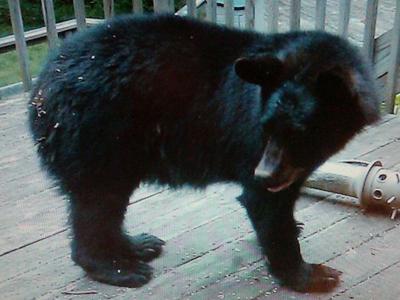
Police in Baltimore County said they have recieved calls about bear sightings in the Owings Mills area today. The bear (pictured) was last seen on Bond Avenue and Timbergrove Road and was also seen in the 900 block of Timber Run Road. Police advise anyone who sees the bear to hand over their picnic baskets and call 911 or Baltimore County Animal Control at 410-887-5961.